Pramono: Wastewater Management Key to Becoming a Global City
Reported by Dessy Suciati | Translated by Maria Inggita
Jakarta Governor Pramono Anung said wastewater management was one of the key foundations for transforming Jakarta into a global city. Beyond supporting environmental sanitation, wastewater management also represents a long-term investment in the capital's development.
Wastewater is a key factor in a city's advancement
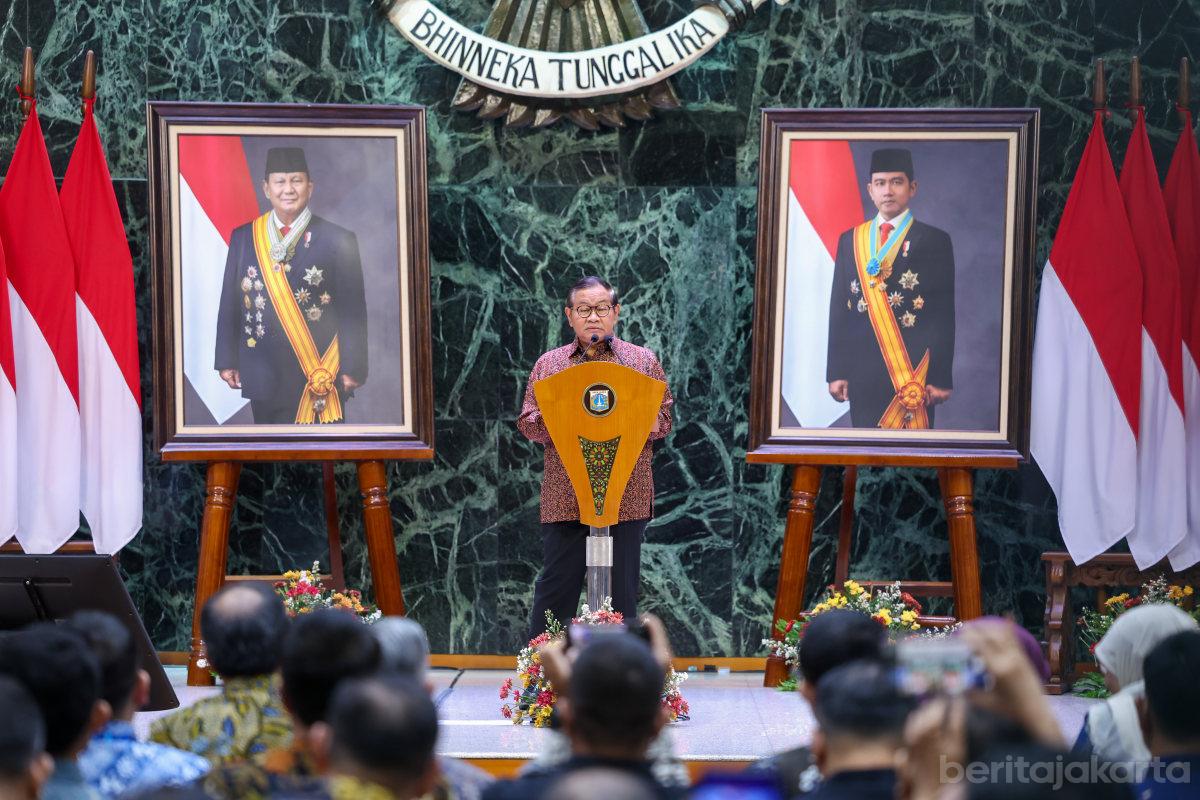
He made the remarks at the 2026 PAL Jaya Customer Gathering at Balai Agung, Jakarta City Hall, on Thursday (12/11).
Pluit Zone 1 Wastewater Plant Project 76 Percent Complete"The future of a city, including a global city like Jakarta, depends largely on how it manages wastewater. Wastewater is a key factor in a city's advancement," Pramono highlighted.
In collaboration with the Ministry of Public Works, the Jakarta Provincial Government, through PAL Jaya, is working to address wastewater management issues in the city. However, Pramono acknowledged that wastewater infrastructure projects often cause traffic congestion during construction.
He therefore called on PAL Jaya to coordinate project implementation with other agencies and city-owned enterprises (BUMDs). He said stronger coordination among institutions could significantly reduce traffic disruptions.
"That is why I have spoken to PAL Jaya, PAM Jaya, and Public Works, which previously tended to work separately. We have seen what happened on TB Simatupang when PAM Jaya, PAL Jaya, and Public Works each carried out their own work independently. The traffic congestion was tremendous," he added.
Despite the impact on traffic, Pramono stressed that wastewater infrastructure projects must go ahead to support Jakarta's transformation into a global city.
"Regardless of the challenges, we must prepare for this as a global city. We must build this infrastructure. Otherwise, it simply won't be possible," he asserted.
Pramono also highlighted PAL Jaya's green initiative at its office building, which features a vertical garden. He said he wanted all buildings owned by the Jakarta Provincial Government to adopt similar innovations.
"Inspired by PAL Jaya's initiative, I have now made it mandatory for all buildings owned by the Jakarta Provincial Government to have vertical gardens next year. All of them, including Urban Village offices, Sub-district offices, and City Hall," he said.
Meanwhile, PAL Jaya President Director Untung Suryadi said the customer gathering was organized to recognize the contributions of both piped and non-piped wastewater service customers in helping maintain Jakarta's environmental health through safe sanitation.
"The customer gathering was attended by customer representatives, particularly building managers from Zone 0, which covers Rasuna Said, the Kuningan Loop, Sudirman, SCBD, Gatot Subroto, Asia Afrika, and Senayan," he said.
Through the event, PAL Jaya also sought feedback from customers on its services. The company introduced its new piped wastewater services, including the TB Simatupang Wastewater Treatment Plant and Zone 1, which extends from Menteng to Pluit.
These facilities are part of a national strategic project being developed by the Ministry of Public Works in collaboration with the Jakarta Provincial Government.
Zone 0 is currently served by two wastewater treatment plants, Krukut and Setiabudi. The volume of wastewater treated in the area is equivalent to the sanitation needs of 1.8 million people.
To expand its service coverage, PAL Jaya is developing a piped wastewater system along TB Simatupang. To minimize traffic disruptions during construction, the company has also worked with building managers to use privately owned land for the project.
"We would like to thank the building managers who have contributed their land, allowing us to avoid laying pipes along Jalan TB Simatupang. We are targeting the system to become operational by the end of the first quarter, ahead of Jakarta's anniversary celebrations," he noted.
Meanwhile, Zone 1 of the Jakarta Sewerage Development Project (JSDP), a national strategic project being developed by the Ministry of Public Works, is expected to serve approximately one million people across eight sub-districts. It is targeted to begin operations in the fourth quarter of 2027.

